A tension rod costs about six dollars, installs in ten seconds, and leaves zero marks. It might be the highest value-per-dollar object in the entire renter's toolkit — and most people only think of it for curtains.
In a small rental kitchen, tension rods are secret storage infrastructure. Here are 9 ways I actually use them, in my kitchen and in friends' kitchens I've helped reorganize.
Under the sink
1. Hang spray bottles by their triggers
Wedge a rod horizontally across the under-sink cabinet and hang every spray bottle from it. The entire cabinet floor opens up for bins. This single hack doubles usable under-sink space.
2. Hang cleaning gloves and small caddies
S-hooks on the same rod hold rubber gloves, scrub brushes, and small hanging caddies. Everything drips dry over the cabinet floor instead of festering in a pile.
Inside cabinets
3. Vertical dividers for trays and boards
Wedge a rod vertically inside a deep cabinet to create a divider. Slide cutting boards, baking sheets, and trays upright between the rod and the cabinet wall. No more avalanches.
4. A second "shelf" for short items
Two rods wedged horizontally at the same height, a few inches apart, create a makeshift shelf for lightweight items — wrap boxes, flat lids, placemats. Not for heavy cans, but perfect for the awkward flat stuff.
On and around the sink
5. Under-cabinet paper towel holder
A short tension rod wedged under an upper cabinet (or inside a cabinet above the sink) holds a paper towel roll. It frees counter space and keeps towels away from splashes.
6. Drying station for dishcloths
Wedge a rod across the sink base or under a cabinet and drape damp dishcloths and towels over it to air-dry. Better than a crumpled pile on the counter, and it costs nothing if you already own a rod.
Beyond the obvious
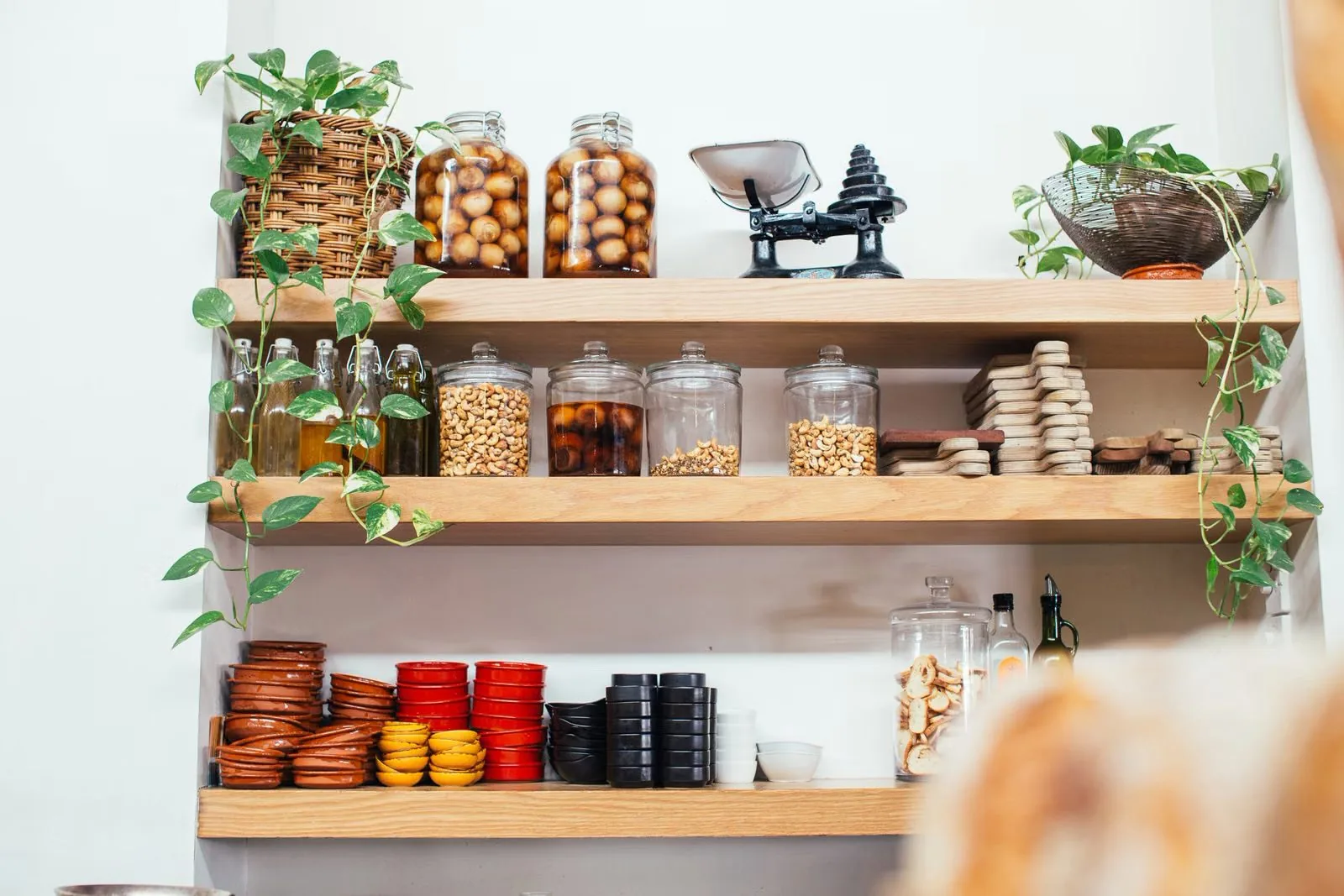
7. Curtain for open shelving
Rental kitchens often have open shelves or awkward open gaps that collect dust and look messy. A tension rod with a café curtain hides the chaos beautifully — and it's fully removable.
8. Produce hammock alternative
Two parallel rods wedged in a cabinet nook with a piece of fabric draped between them make a ventilated produce sling for onions and garlic. Airflow keeps them fresh longer than a sealed bin.
9. Room divider for studio kitchens
In a studio where the "kitchen" is a corner of the living room, a tall tension rod with a curtain creates a visual boundary. It's not storage, but it makes a one-room apartment feel like it has a kitchen — which matters more than you'd think.
How to make them actually stay put
- Measure first: rods have a min–max range. Too short and they slip; too long and they bow.
- Twist to tighten: extend until snug, then give an extra quarter-turn. The spring does the work.
- Rubber ends matter: cheap rods with bare metal ends slip on smooth surfaces. Look for rubber-capped ends.
- Respect weight limits: tension rods hold light-to-medium loads beautifully and heavy loads badly. Bottles and boards: yes. Cast iron: absolutely not.
Tension rods vs. other no-drill options
Tension rods aren't the only renter-friendly tool. Here's when to choose what:
- Tension rod: best for spanning a gap — across cabinets, under sinks, inside frames. Needs two opposing surfaces. Cheapest and fastest.
- Adhesive hooks: best for single-point hanging on flat surfaces — walls, backsplashes, cabinet sides. No gap needed, but limited by adhesive strength.
- Over-door hangers: best for doors. Zero surface prep, highest weight capacity of the three, but only works where there's a door.
- Freestanding organizers: best when you have floor or counter space to spare — rolling carts, tiered stands. Nothing touches the walls at all.
The magic is in combining them: a tension rod for bottles under the sink, adhesive hooks on the cabinet doors, and a freestanding cart beside the fridge. Each tool covers what the others can't.
📌 Pin this for later
9 Tension-Rod Hacks for Rental Kitchens — save it to your "Renter Friendly Home" board.
Frequently asked questions
Will a tension rod damage my rental cabinets?
No — that's the point. They grip with spring pressure and rubber ends, leaving no holes or marks. Just don't overtighten to the point of warping thin cabinet walls.
What size tension rod do I need for under the sink?
Measure the interior width of your cabinet and buy a rod whose range covers it — most under-sink cabinets need a 16–24 or 18–28 inch rod. When in doubt, size up slightly; a rod at mid-extension holds best.
How much weight can a tension rod hold?
It depends on the rod, but most small kitchen rods comfortably hold 3–10 pounds. Fine for spray bottles, towels, and trays. Not fine for heavy pots or full cleaning-product arsenals — distribute heavy items to bins on the cabinet floor.
Do tension rods work in wide spaces?
Only up to a point — most kitchen rods max out around 28–36 inches, and longer spans sag or slip. For wider gaps, either use two rods with a mid-support, or switch tools: adhesive hooks and wall-mounted options handle wide spans better than a single rod.
Can I use a tension rod as a curtain rod in the kitchen?
Absolutely — it's one of their best uses. A café curtain on a tension rod hides messy open shelving, covers an awkward under-sink gap, or adds privacy to a studio kitchen corner. Choose washable fabric, since kitchen curtains collect grease faster than you'd expect.
What's the difference between a tension rod and a shower curtain rod?
Only size and strength. A shower rod is just a heavy-duty tension rod — thicker, stronger, and made for wider spans. For kitchen cabinets and under-sink use, the smaller spring rods (often sold as curtain or closet rods) are the right tool: lighter, cheaper, and sized for tight spaces.