Learning how to clean an air fryer in a small rental kitchen takes about five minutes once you know the routine — and skipping it is what ruins the machine. A dirty basket smokes, old grease makes every meal taste like the last one, and a soaked base can kill the appliance outright. In a rental, that matters twice: the air fryer probably sits on your counter because there is nowhere else to put it, and if it belongs to the landlord, replacing it can come out of your deposit. The fix is simple and cheap, and it is built around one rule — the basket gets washed, the base never gets wet.
This guide covers the five-minute clean after every use, the weekly deep clean, the heating element you wipe but never submerge, lingering smells, nonstick coating care, and washing and storing an air fryer when your sink is barely bigger than the basket.
The five-minute clean after every use
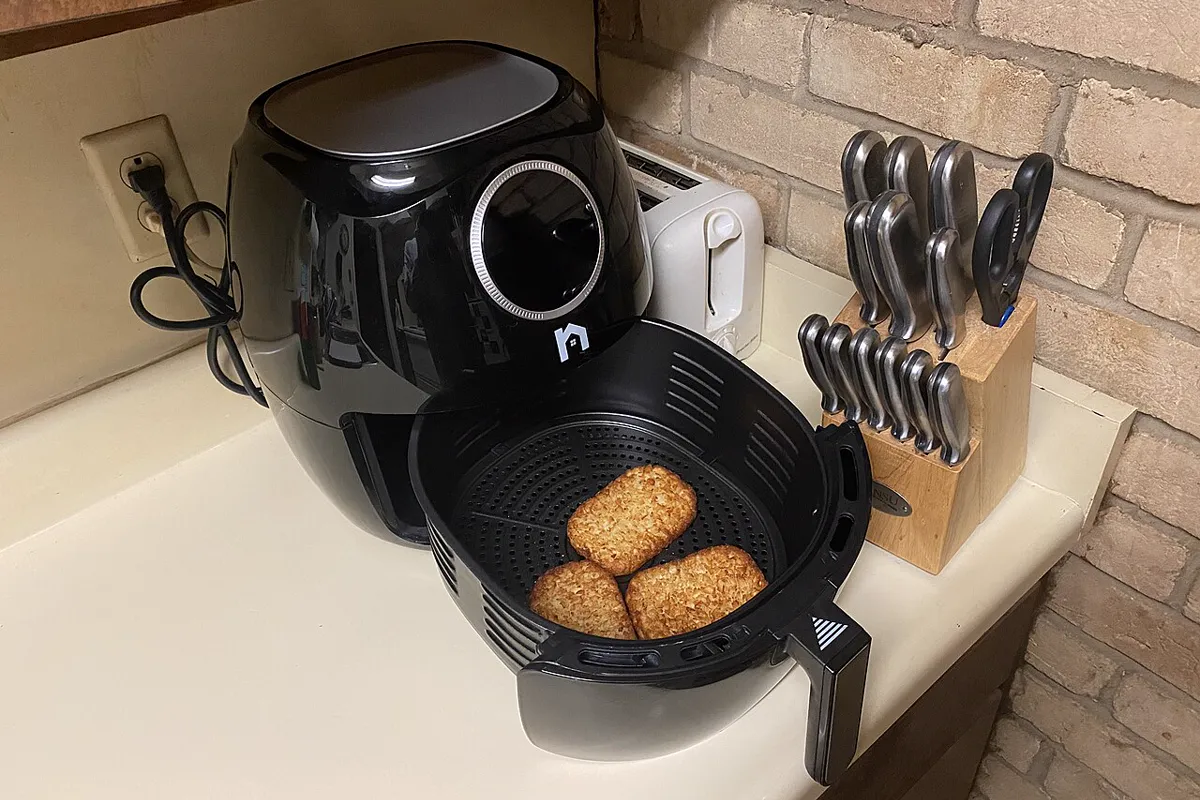
The habit that keeps an air fryer working is a quick clean while it is still warm, not hot. Unplug it and let it cool for ten minutes, until you can touch the basket comfortably. Pull out the basket and drawer, tip out any crumbs and loose grease into the bin — never into the sink, where grease cools and clogs the drain — and wash both parts in hot water with a drop of washing-up liquid. A soft sponge is all you need; the nonstick surface releases food easily while it is still warm.
While the basket soaks for a minute, wipe the inside of the drawer cavity with a damp cloth to catch any drips that ran down the sides, and wipe the outside of the machine with the same cloth. Dry everything with a tea towel or leave it on the draining board to air-dry before you slide the basket back in. That is the entire daily routine: unplug, cool, tip, wash, wipe, dry. It takes five minutes, and it stops grease from baking onto the basket at the next cook. If your air fryer lives on a crowded counter, the small kitchen appliance storage guide shows how to give it a home that makes this routine easy.
The deep clean: basket, drawer, and tray
Once a week — or after anything greasy, sticky, or sugary — the basket and drawer need a proper soak. Fill the drawer with hot water and a squirt of washing-up liquid, slide the basket back into it, and leave the whole thing to soak in the sink for twenty to thirty minutes. The hot water and soap loosen the grease that the daily wash leaves behind, especially around the handle joint and the rim of the basket, where crumbs collect and harden.
After the soak, wash with a soft sponge or a non-scratch scouring pad, working around the mesh or the holes in the basket base. An old toothbrush is ideal for the corners and the underside of the tray, where grease hides and goes rancid. For a stubborn, baked-on patch, make a paste of baking soda and a little water, spread it on the spot, leave it for fifteen minutes, and wipe it off — the same gentle paste used in the microwave cleaning guide. Rinse everything in hot water and dry it fully before reassembling; a basket put away damp grows a smell. Never put the basket in the dishwasher unless the manual says it is dishwasher-safe.
The heating element: wipe it, never submerge it
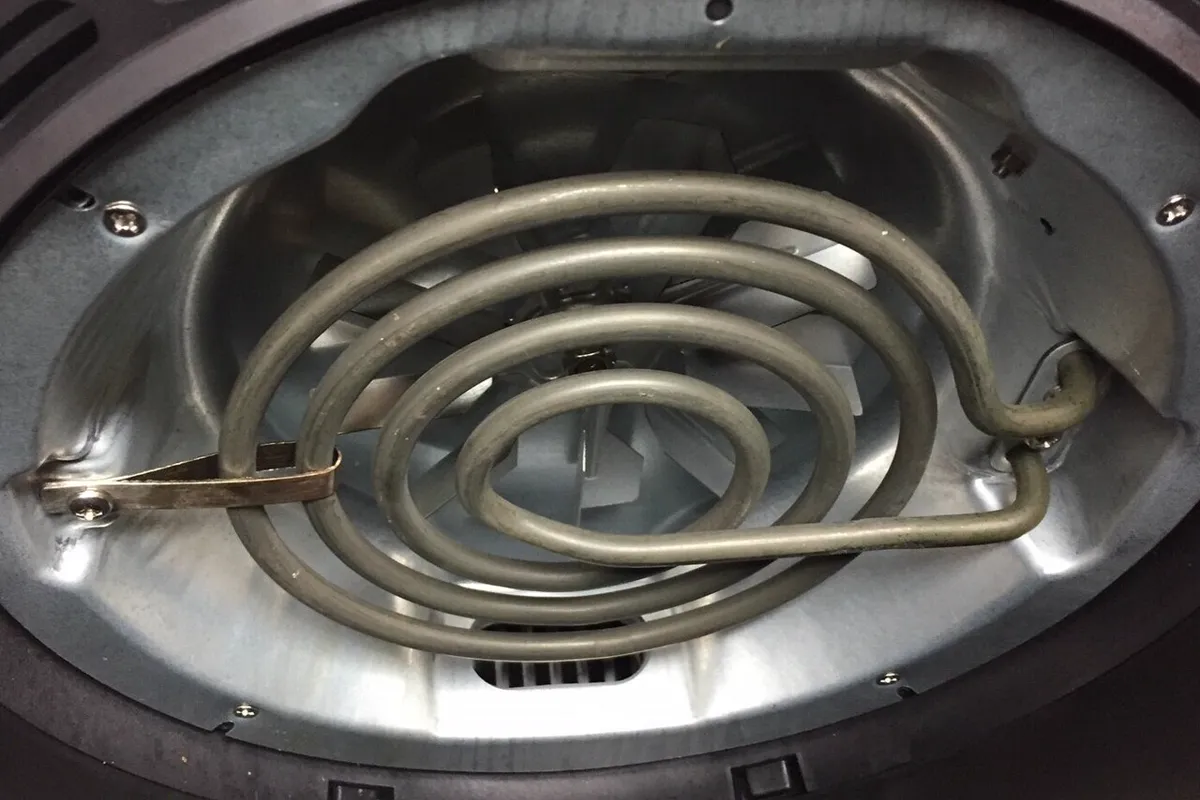
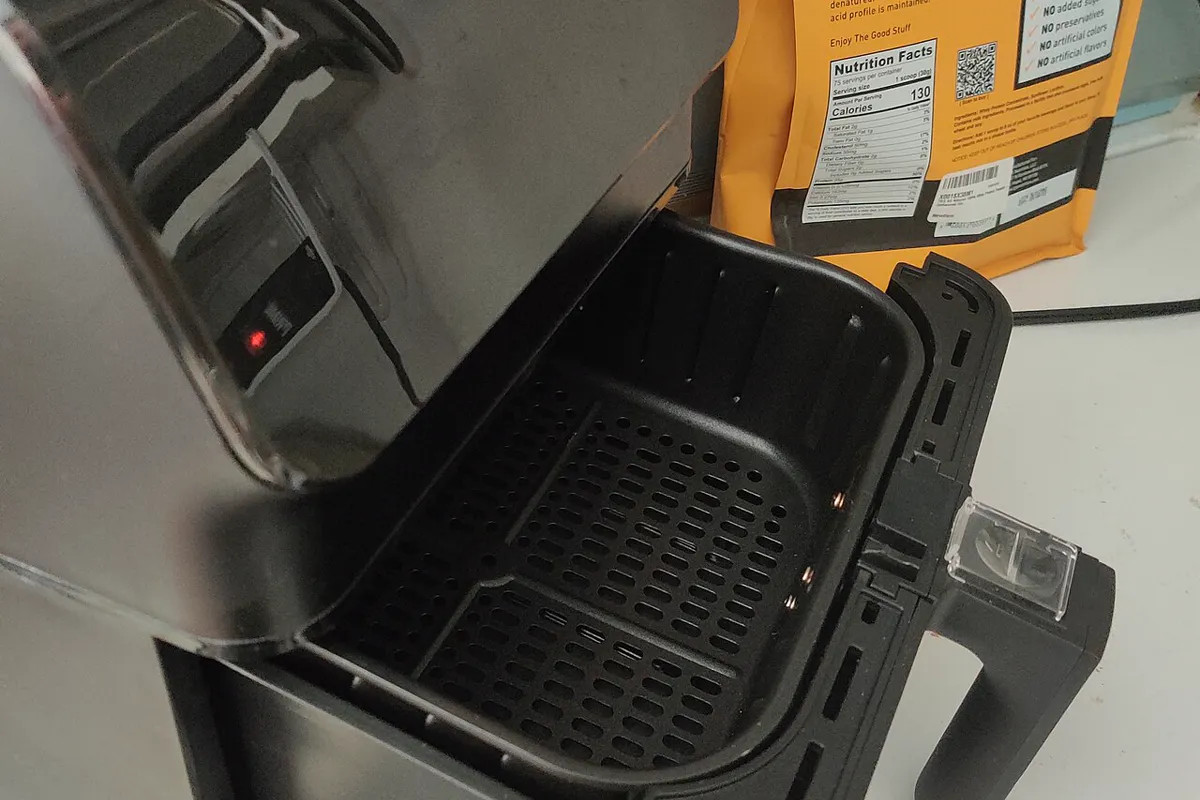
Open the drawer and look up: the heating element is the coil or rod at the top of the cavity, with a fan behind or beside it. It collects grease splatter from everything you cook, and when it gets dirty enough it smokes and smells. It is also the one part of the air fryer that must never get wet. The base of the machine contains the electrics, and submerging it or running water over it can destroy the appliance or make it unsafe to use.
To clean it, unplug the machine and let it cool completely. Turn the air fryer upside down or tilt it so you can see the element clearly, and wipe the coil gently with a damp microfibre cloth. For baked-on spots, use the same baking soda paste on the cloth — never sprayed directly onto the element — and wipe with a clean damp cloth afterwards. A soft brush, like an old toothbrush, reaches the gaps between the coils and around the fan blades. Never use a metal scraper, steel wool, or oven cleaner inside the cavity. If the element is loose or sparking, stop using the air fryer and report it to the landlord if it is theirs.
Getting rid of smells — and keeping them from coming back
An air fryer that smells of old fish, garlic, or burnt grease is not broken; it is just overdue a clean. The smell lives in three places: the basket, the drawer, and the element, and all three need attention before the smell goes. Start with the deep clean above, including the element wipe, and then run a deodorising cycle: put a small oven-safe dish with half a cup of water and a tablespoon of white vinegar in the basket, and run the air fryer at 180°C for three minutes. The steam loosens any remaining grease and the vinegar neutralises the smell.
For a stubborn smell, soak the basket and drawer in hot water with a tablespoon of baking soda for thirty minutes before washing them normally. Baking soda absorbs odours rather than covering them, which is why it works when scented sprays do not. Never use bleach or a strongly scented cleaner inside an air fryer: the smell bakes into the next meal, and bleach residue is not something you want near food. The microwave storage guide covers the same drying-first principle for small appliances squeezed onto one counter.
Nonstick coating care: the habits that keep the basket alive
The nonstick coating on the basket and drawer is the most fragile part of the air fryer, and once it flakes or peels, food sticks, cleaning gets harder, and the basket needs replacing. Three habits protect it. First, never use metal utensils in the basket — no metal tongs, no fork, no knife to lift food out. Use silicone, wood, or heat-resistant plastic, and tip the food out instead of scraping it. Second, never use a metal scourer, steel wool, or an abrasive sponge on the basket; a soft sponge and the baking soda paste are the strongest cleaners it will ever need.
Third, skip the cooking spray. Aerosol sprays contain propellants and emulsifiers that build up into a sticky, yellowed layer on nonstick surfaces, and that layer cannot be washed off — it has to be scrubbed off, which damages the coating. Brush oil on with a pastry brush or a silicone brush instead, or use a refillable oil mister. Handle the basket by the handle, not by the mesh. If the coating is already flaking, stop using the basket and look for a replacement part from the manufacturer.
Washing in a small sink, and storing it right
A small rental sink is the air fryer's worst enemy, because the basket is wider than the basin and the drawer is deeper than it looks. The trick is to wash in stages instead of fighting the sink. Fill the drawer with hot soapy water and leave it in the sink while you wash the basket first, turning it as you go so every side gets the sponge. Then empty the drawer, wash it the same way, and rinse both parts under the running tap rather than trying to fill the sink around them.
Drying matters as much as washing. Air fryers trap water in the basket mesh, under the tray, and around the handle joint, and a basket put away damp will smell by morning. Dry every part with a tea towel, then leave the basket out of the drawer for an hour so the air reaches every surface. Only reassemble it when it is completely dry to the touch. Store the air fryer upright and unplugged on the counter, with the basket inside and the cord wrapped loosely around the back. Do not store it on its side or under a stack of other appliances. If counter space is the problem, the appliance storage guide has renter-friendly ways to carve out a home for it without drilling a single hole.
📌 Pin this for later
How to Clean an Air Fryer in a Small Rental Kitchen — save it to your "Small Kitchen Organization" board.
Frequently asked questions
Can I put the air fryer basket in the dishwasher?
Only if the manual says it is dishwasher-safe. The high heat and harsh detergent of a dishwasher cycle strip nonstick coatings faster than hand washing, and a flaking coating means the basket needs replacing. Hand washing in hot soapy water takes five minutes and keeps the coating intact for years.
Can I submerge the air fryer in water to clean it?
Never. The base contains the heating element, the fan, the controls, and the electrics, and submerging it can destroy the appliance or make it unsafe to use. Only the basket, the drawer, and any removable tray come out and get washed. The element and the cavity get a wipe with a damp cloth, never running water.
How do I get the smell out of my air fryer?
Deep-clean the basket, the drawer, and the heating element first, because the smell lives in all three. Then run a deodorising cycle: a small oven-safe dish with half a cup of water and a tablespoon of white vinegar in the basket, at 180°C for three minutes. For a stubborn smell, soak the basket and drawer in hot water with a tablespoon of baking soda for thirty minutes.
Can I use cooking spray in my air fryer?
It is best not to. Aerosol cooking sprays contain propellants and emulsifiers that build up into a sticky, yellowed layer on nonstick surfaces, and that layer cannot be washed off — it has to be scrubbed off, which damages the coating. Brush oil on with a pastry brush instead, or use a refillable oil mister.