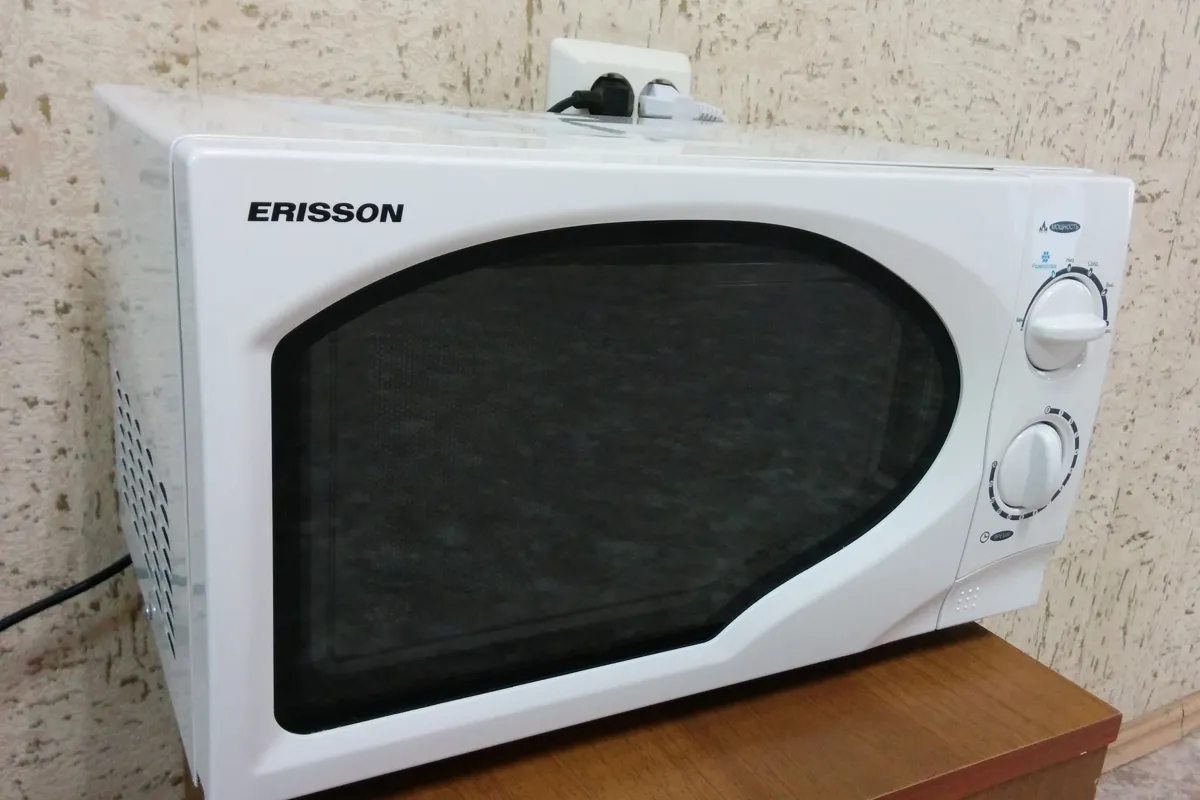
Knowing how to clean a microwave in a rental kitchen is a deposit skill, not a housekeeping nicety. The microwave belongs to the landlord, and at move-out an inspector will open the door and check the turntable, the door seal, and the vents. A microwave caked in old splatter reads as neglect, and a damaged one can cost far more than a cleaning session. The good news is that a microwave is one of the easiest appliances to clean well, with nothing more expensive than vinegar, water, and a lemon.
The whole method fits in one sentence: steam the inside with vinegar and lemon water, wipe it out while it is still warm, and clean the turntable and seal separately. Everything else in this guide is the detail — how long to heat it, what never to spray inside, how to handle the vents and the outside, and what to tell the landlord versus what to fix yourself.
First: the steam method, step by step
Fill a microwave-safe bowl or large measuring jug with one cup of water, add two tablespoons of white vinegar, and drop in a lemon cut in half — or squeeze the juice in and drop the halves in too. Put the bowl in the microwave, close the door, and heat it on high for five minutes. You want the water boiling hard and the inside of the microwave fogged with steam.
When the timer ends, do not open the door straight away. Leave it closed for another three to five minutes so the steam keeps working on the dried splatter. Then open the door carefully — the bowl will be very hot — and lift it out with an oven mitt or a folded towel. Now wipe the inside with a damp microfiber cloth or a sponge: the ceiling, the walls, the floor, and the inside of the door should all wipe clean with almost no scrubbing, because the steam has loosened everything. For any stubborn spot, dip the cloth in the hot lemon water and rub gently. Finish with a clean damp cloth to remove any vinegar residue, then a dry cloth so no moisture is left standing.
If your microwave is in bad shape, run the steam cycle twice, back to back — two steam cycles are still faster and gentler than ten minutes of scrubbing. The vinegar smell fades within an hour once the door has been left open to air.
The turntable, the ring, and the door seal
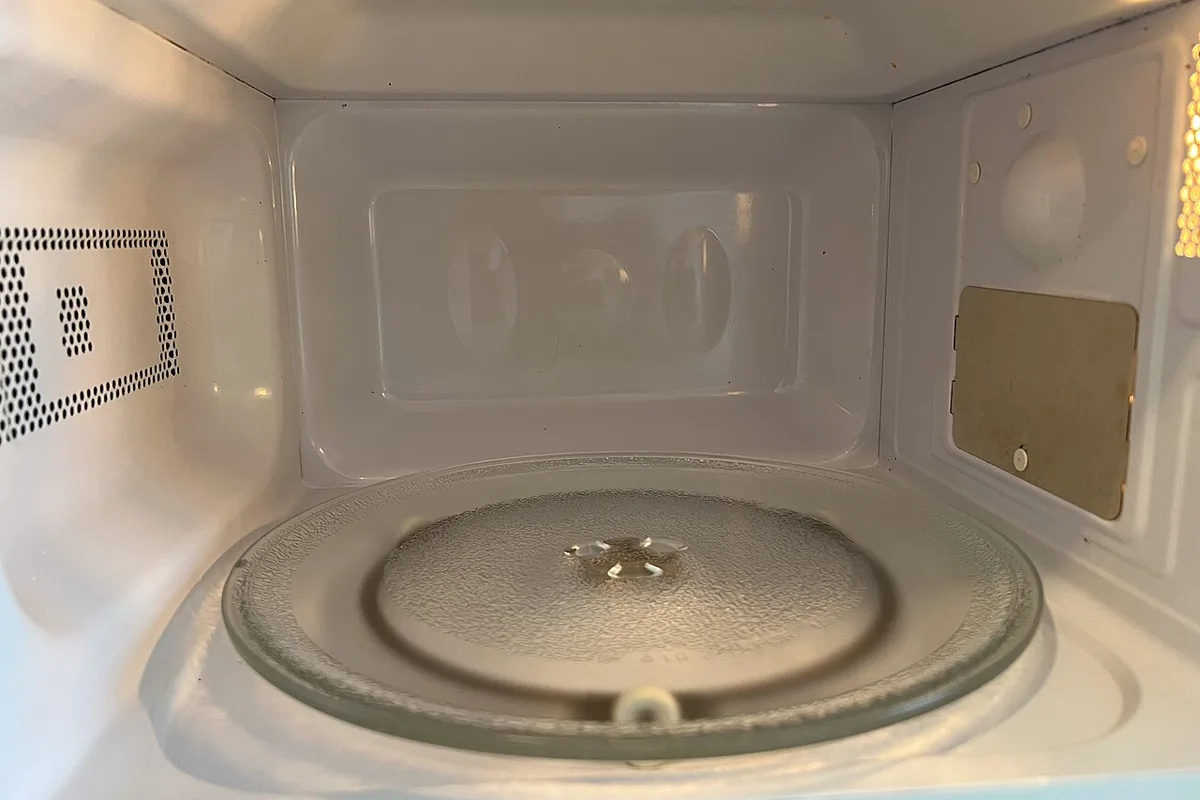
Take the glass turntable out and wash it separately, like a plate: hot water, dish soap, a sponge. It is glass, so it can take a proper scrub, and it is the part that collects the most grime because every spill runs down onto it. Dry it fully before you put it back, and check the little roller ring underneath it. Food gets trapped under the ring, and a ring stuck with old grease makes the turntable judder and squeak. Lift the ring out, wash it in the sink, and wipe the floor underneath before you reassemble.
The door seal is the part most renters never clean, and it is the part an inspector notices. The seal is the rubber or plastic strip around the inside of the door, and it needs to be clean and undamaged. Wipe it with a damp cloth and a drop of dish soap, working around the whole perimeter, and dry it after. Never pull at it or pry it loose. If the seal is torn, warped, or coming away from the door, stop: that is not a cleaning job, it is a maintenance issue, and it belongs in a message to the landlord. A damaged seal is a safety matter, and a tenant who tries to glue it back can make it worse and take on liability for the repair.
The vents, the outside, and the stainless finish
The vents are usually on the top or the side of the microwave, and they collect a film of kitchen grease over time. Wipe them with a damp cloth and dish soap, working from the outside in — do not poke anything into the vent slots, and never spray cleaner directly at them, because liquid inside the vents can reach the electronics. If the vent cover is removable and the manual says it comes off, take it off and wash it in the sink; if it is fixed, a careful wipe is enough. The outside of the microwave gets the same treatment: a damp microfiber cloth with dish soap, then a dry buff.
On stainless steel, skip anything abrasive — no scouring pads, no baking soda paste, no steel wool. Stainless scratches easily, and a scratched door is exactly the kind of cosmetic damage a landlord can charge for. Wipe with the grain, using a soft cloth and a drop of dish soap, and dry it straight away to avoid water spots. The glass stovetop cleaning guide covers the same no-abrasive rule for another landlord-owned surface.
What never to use inside a microwave
Never heat a cleaning spray inside the microwave. It sounds like a shortcut — spray it in, run the microwave, wipe it out — but heating a chemical cleaner aerosolizes it, coats the inside with a residue that then gets into the next meal you heat, and can damage the interior coating. Spray cleaners belong on a cloth, used on a cold microwave, never heated. The same goes for bleach: never use bleach inside a microwave, and never mix bleach with vinegar — the fumes are dangerous, and the combination is a genuine health hazard, not just bad cleaning advice.
Do not use abrasive pads, steel wool, or scouring powder inside the microwave either. The interior is a painted or coated metal surface, and once that coating is scratched, food sticks to it more, rust can start, and the damage is visible at inspection. And never run the microwave empty — it can damage the magnetron, and that is a repair, not a cleaning job.
Burnt smells, stains, and the worst cases
Burnt popcorn is the most common microwave disaster, and it leaves a smell that seems permanent. It is not, but it takes a few steps. First, clean the inside properly with the steam method above — the smell lives in the splatter as much as in the air. Then heat a fresh bowl of water with lemon halves for five minutes and leave the door closed for ten. After that, leave the door open overnight to air out. If the smell is still there the next day, place a small bowl of baking soda inside with the door closed for a day, then repeat the lemon steam once more.
For everyday prevention, the single best habit is a microwave cover. A cheap vented cover over every plate you heat stops ninety percent of splatter before it happens. Wipe the inside once a week with a damp cloth, and the microwave will never need a deep clean again. Keep the cleaning supplies you need — vinegar, a lemon, a microfiber cloth — within reach, not buried under the sink; the cleaning supplies storage guide shows how to keep the few bottles a small kitchen needs without losing a whole shelf to them.
Move-out and inspection: the checklist
Before your final inspection, run through this short checklist. Inside: steam clean, wipe every surface, wash the turntable and the roller ring, wipe the door seal, and leave the door open for an hour so the inside is fully dry — a closed, damp microwave grows mold fast. Outside: wipe the door, the handle, the control panel, and the vents, and polish stainless with a dry cloth. Then check that the turntable sits level and spins freely, the door closes and latches properly, and the light comes on when the door opens.
Photograph the inside and outside after cleaning, in good light, as part of your move-out record. If the microwave was already damaged when you moved in, those photos are your defense. The small kitchen declutter checklist includes the microwave as a final-clean item. Finally, know the line between cleaning and repair: cleaning is your job, while a torn door seal, a turntable that will not spin, sparking, or a burning smell belong to the landlord. Report those promptly, in writing, and unplug a microwave that sparks or smells of burning the same day.
📌 Pin this for later
How to Clean a Microwave in a Rental Kitchen (Deposit-Safe) — save it to your "Small Kitchen Organization" board.
Frequently asked questions
How do I clean a microwave with vinegar and lemon?
Put one cup of water, two tablespoons of white vinegar, and a halved lemon in a microwave-safe bowl. Heat on high for five minutes, leave the door closed for another three to five minutes so the steam keeps working, then wipe the inside with a damp microfiber cloth while it is still warm.
Can I spray cleaner inside the microwave?
You can use a spray cleaner on a cloth on a cold microwave, but never heat a cleaning spray inside it. Heating a spray aerosolizes the chemicals, leaves residue that gets into the next meal you heat, and can damage the interior coating.
How do I get the burnt popcorn smell out of a microwave?
Clean the inside properly with the steam method first, because the smell lives in the splatter. Then heat a fresh bowl of lemon water for five minutes, leave the door closed for ten, and leave the door open overnight. If the smell remains, place a small bowl of baking soda inside with the door closed for a day — it absorbs odors — and repeat the lemon steam once more.
Should I tell my landlord if the microwave is damaged?
Yes, and promptly, in writing. A torn door seal, a turntable that will not spin, sparking, or a burning smell are repairs, not cleaning jobs — they belong to the landlord. A problem reported early is a maintenance request; the same problem discovered at the final inspection can become a deposit dispute.