The fridge in a rental kitchen belongs to the landlord, which makes cleaning it feel like a grey area — but knowing how to clean a fridge in a rental kitchen is one of the simplest ways to protect your deposit and stop living with a smell you have gone nose-blind to. The last tenant's spilled milk and mouldy gasket become your problem on move-in day. A full clean takes about an hour, uses supplies you already have, and leaves the fridge smelling like nothing at all — which is exactly how a fridge should smell.
This guide walks through the job in order: empty and defrost, wash the shelves and drawers, scrub the gasket, deodorise with baking soda, and finish with a move-out checklist and photo proof. Nothing here requires tools or risks the appliance — but there are lines a renter should not cross. A broken seal, a fridge that will not cool, or a freezer that never defrosts is a landlord repair, not a cleaning job.
Empty it and defrost the freezer first
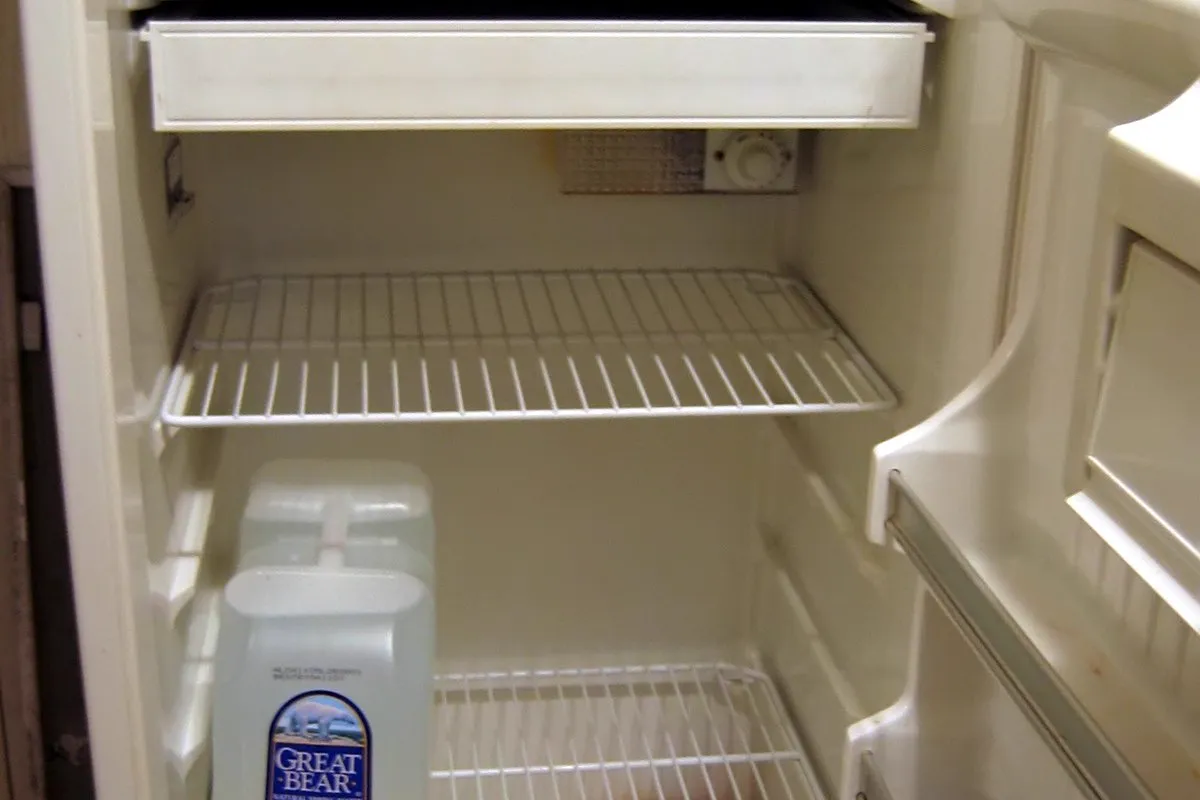
Start by taking everything out — every shelf item, every door bottle, every jar hiding at the back. Put perishables in a cooler bag or a neighbour's fridge, and be honest about what you pull out: anything past its date, anything you cannot identify, and anything open for months goes straight in the bin.
Turn the fridge off or turn the dial to its lowest setting, and prop the freezer door open so the frost can melt. Put old towels on the floor and a shallow tray under the freezer to catch the meltwater. Never chip frost away with a knife or screwdriver — one slip punctures a coolant line, and that turns a free cleaning job into a repair bill you will be charged for. A bowl of hot water set inside the freezer speeds the melt safely.
While the freezer defrosts, remove the shelves and drawers and set them aside for washing. Check the drain hole at the back of the fridge compartment — a small round hole at the bottom of the back wall that clogs with crumbs and causes puddles under the salad drawer. Clear it gently with a cotton bud, never a metal pin.
Wash the shelves, drawers, and walls
Wash the shelves and drawers in the sink with hot water and washing-up liquid. Wire shelves scrub easily with a dish brush; glass shelves need a soft cloth so they do not scratch, and plastic drawers benefit from a ten-minute soak in hot soapy water if they have sticky residue. Rinse everything and let it air-dry on a towel.
Wipe the inside walls, ceiling, and floor with a cloth dampened in warm water with a squeeze of washing-up liquid, working from the top down so dirty water does not drip onto parts you have already cleaned. Pay attention to the shelf rails and the grooves the drawers slide in, where spills pool and dry into a crust. For sticky patches, use a paste of three parts baking soda to one part water, rub gently, and wipe away with a clean damp cloth.
Do the same inside the freezer once it has defrosted: warm soapy water on all surfaces, then a final wipe with plain water so no soap residue is left. Dry the freezer thoroughly before switching the fridge back on, because standing water freezes into a fresh layer of ice within hours. The dishwasher cleaning guide follows the same dry-before-you-close rule.
Scrub the door gasket and tackle mould
The rubber seal around the fridge door — the gasket — is where black mould hides in a rental fridge. Pull the seal gently away from the door to open the fold, and wipe inside it with a cloth dampened with warm water and a drop of washing-up liquid.
For dark mould spots, dampen the cloth with a one-to-one mix of white vinegar and water, wipe the spots, then rinse with a clean damp cloth and dry the seal completely. Never use bleach on a rubber gasket — bleach degrades rubber, makes the seal brittle, and can leave a smell that transfers into food. If the mould has eaten into the rubber, or the seal is torn or no longer holds a piece of paper when you close the door on it, stop and tell the landlord: a failed seal is a repair, and a fridge with a failed seal never stays cold.
While you are at the door, wipe the handle, the front panel, and the top of the fridge, where dust and grease collect. If you store anything on top, lift it off and wipe the surface first — the top-of-fridge storage guide covers what is safe to keep up there and what should never go near a heat vent.
Deodorise with baking soda
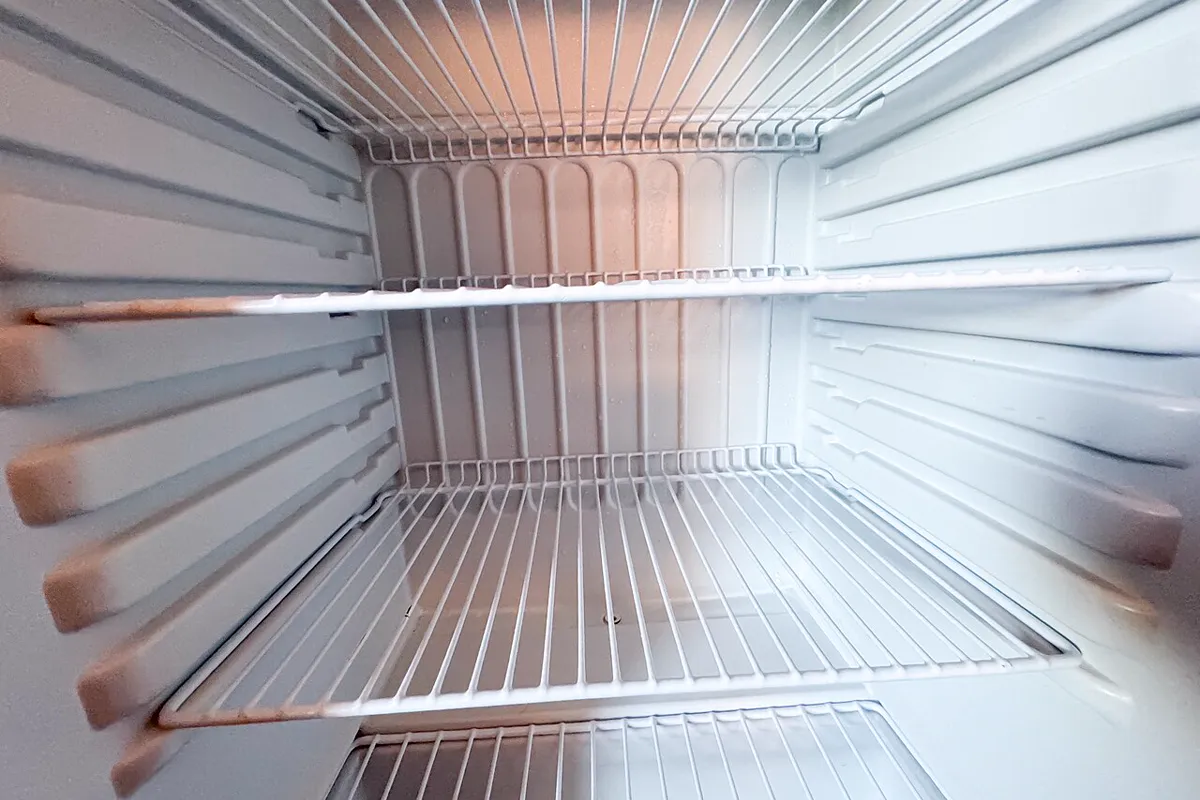
Once everything is clean and dry, place an open box of baking soda on a middle shelf — not in the door, where it tips over — and leave it there. Baking soda absorbs the sour, musty smells that survive a wash, and it keeps working for about a month before it needs replacing. Write the date on the box when you open it so you know when to swap it.
For a fridge that still smells after a full clean, wipe the interior once more with a cloth dampened in two tablespoons of baking soda dissolved in a litre of warm water, then dry it and leave the door open for an hour.
Do not mask a fridge smell with air fresheners, scented sprays, or dryer sheets. They do not remove the source of the smell, and their fragrance transfers into uncovered food. A clean fridge smells like nothing, and baking soda is the only deodoriser a fridge needs.
What to tell the landlord vs what to fix yourself
Cleaning is your job; repairs are the landlord's. You can empty and defrost the fridge, wash the shelves and drawers, wipe the gasket, clear the drain hole, and deodorise with baking soda. You should not replace a gasket, regas a cooling system, repair a compressor, or move a full-size fridge to reach the coils at the back. Moving a fridge alone risks scratching the floor, kinking a water line, and injuring yourself — and any damage from the move is yours.
Report a problem in writing — email or the maintenance portal, not just a text — and describe what you already tried: "I emptied and defrosted the fridge, cleaned the gasket, and it still will not hold temperature below 5°C." If the fridge stops cooling entirely, move perishables to a cooler, unplug it if water is pooling underneath, and report it the same day.
If the fridge was already dirty, mouldy, or damaged when you moved in, your move-in photos are your evidence. Photograph the gasket, the drawers, and any stains before you clean them, and keep the photos with your inventory. Cleaning a dirty fridge does not make its pre-existing condition your fault — but without photos, you cannot prove what it looked like on day one.
Move-out fridge checklist and photo proof
At move-out, the fridge is one of the first things an inspector opens, and a dirty fridge is one of the easiest deposit deductions to avoid. Give yourself an afternoon in your final week: empty everything, defrost the freezer, wash the shelves and drawers, scrub the gasket, wipe the interior with the baking-soda solution, and leave the doors open overnight so the appliance dries completely.
Leave the fridge switched on at a normal temperature unless your landlord tells you otherwise. If you are told to leave it off, prop both doors open with a rolled towel so air circulates and mould cannot grow. Wipe the outside, including the handle and the top, so there are no fingerprints or water marks.
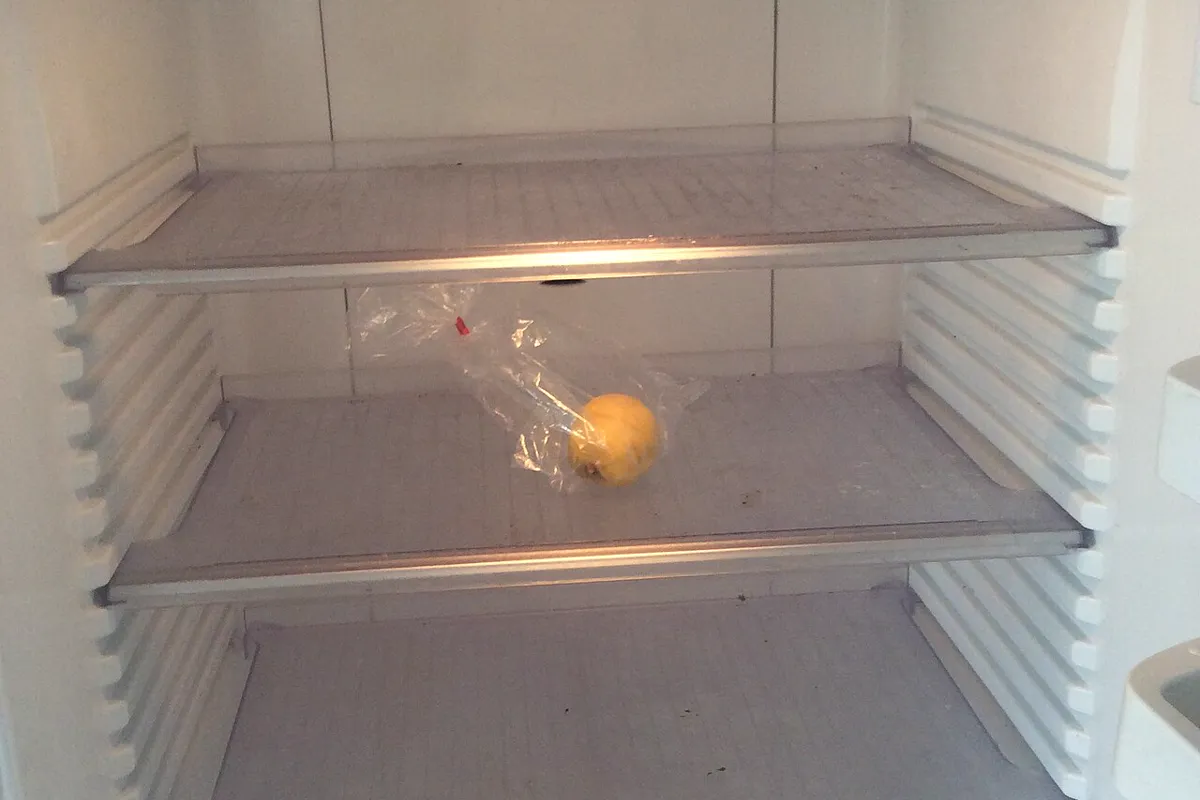
Photograph the finished fridge before you hand the keys back: the empty shelves, the clean drawers, the gasket, the freezer, and the outside. Keep the photos with your move-out records and send a copy to the landlord with your checkout note. The small fridge organisation guide covers how the space works once it is clean — this guide is about getting it clean, and the photos prove you did.
📌 Pin this for later
How to Clean a Fridge in a Rental Kitchen (Smells, Mold, Move-Out) — save it to your "Small Kitchen Organization" board.
Frequently asked questions
How often should I clean a fridge in a rental kitchen?
Wipe spills and the door handle every week, and do a full clean — empty, defrost, wash shelves and drawers, scrub the gasket, deodorise with baking soda — every three months, plus once more in your final week before move-out.
Can I use bleach to clean a rental fridge?
Baking soda and warm soapy water handle almost every fridge-cleaning job, and white vinegar diluted one-to-one with water works on mould spots. Never use bleach on the rubber gasket — it degrades rubber and makes the seal brittle.
How do I get rid of a smell in a rental fridge?
Empty and clean the whole fridge, scrub the gasket fold, clear the drain hole, then wipe the interior with baking soda in warm water and leave an open box on a middle shelf. If the smell returns within a week, the drain or the gasket is the likely source.
How do I clean mould from a fridge door seal?
Pull the gasket fold open gently and wipe inside it with a cloth dampened in a one-to-one mix of white vinegar and water, then rinse and dry it completely. If the mould has eaten into the rubber or the seal is torn, report it to the landlord as a repair.
Should I defrost the freezer before I move out?
Yes. Empty the freezer, turn the fridge off or to its lowest setting, prop the door open, and let the frost melt — never chip it off with a knife. Mop up the meltwater, dry the compartment, and leave the doors propped open so the fridge cannot grow mould after you hand the keys back.