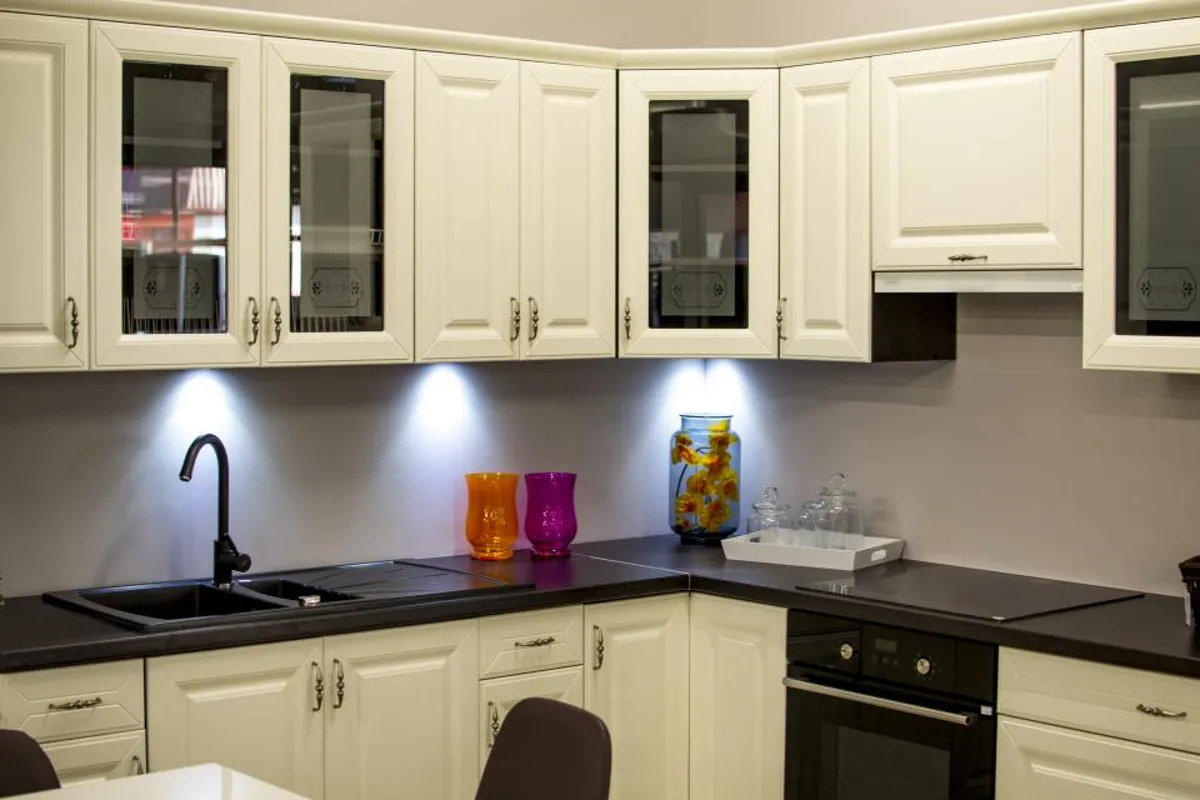
Grease builds up on kitchen cabinets so gradually that you barely notice it — until you run a finger along a door front and it comes away sticky. In a rental, that film matters more than it would in your own home, because the cabinets belong to the landlord, and a finish stripped by the wrong cleaner can show up as a repair charge at move-out. The good news is that learning how to clean greasy kitchen cabinets in a rental is mostly about restraint: start with the mildest cleaner that works and test everything in a hidden spot first.
The method in this guide is a ladder. Step one is warm water and dish soap. If that does not cut the grease, step up to a vinegar solution. If that still does not work, step up to a baking-soda paste. At every rung, you test first, work gently, and dry the surface when you finish. Most cabinet grease comes off at rung one or two — cabinets only get damaged when a renter skips the ladder and goes straight to a powerful degreaser or an abrasive pad.
Start with the hidden-spot test
Before any cleaner touches a visible cabinet door, test it on the inside edge of a door or the underside of a wall cabinet. Apply a little, wait ten minutes, and look for clouding, softening, a colour shift, or a tacky feel. If anything looks different, that cleaner is too strong for your finish, and you drop back a rung on the ladder.
This test matters because rental cabinets are not all the same material, and you usually do not know exactly what finish you are dealing with. A glossy white cabinet might be painted wood, thermofoil vinyl, or laminate, and each reacts differently.
Know your finish: wood, laminate, and painted cabinets
Solid wood cabinets with a clear varnish or lacquer tolerate dish soap and a damp cloth well, but they hate standing water and harsh solvents. Wring your cloth out thoroughly, wipe with the grain, and dry the surface right away. Never let water pool along the bottom edge of a door. Laminate and thermofoil doors are water-resistant but solvent-sensitive: stick to soap and water and a soft cloth, and never use a scouring pad.
Painted cabinets, especially older ones with a matte or chalk-style paint, are the most delicate: grease soaks into matte paint, and scrubbing can rub the paint itself off. On painted doors, use the mildest method, the lightest pressure, and the shortest contact time — and accept that a very old grease stain on matte paint may never come fully clean, which is a maintenance issue for the landlord, not something to fix by scrubbing harder.
Rung one: dish soap and warm water
Fill a bowl with warm water and add a few drops of ordinary dish soap — the same kind you use for plates. Dish soap is designed to cut kitchen grease, and it is gentle enough for every common cabinet finish. Dip a microfiber cloth, wring it out until it is just damp, and wipe the greasy area in small circles.
Work top to bottom, one door at a time, and rinse the cloth often — a cloth loaded with grease just spreads grease around. Follow each soapy pass with a clean damp cloth to remove the soap, then dry the door with a third cloth. Drying matters: soap residue left on a cabinet attracts dust and turns sticky again within days. For most renters, this rung alone handles the weekly grease film, and the cleaning supplies storage guide shows how to keep the soap, cloths, and spray bottle handy in a small kitchen so the ten-minute wipe actually happens.
Rung two: a vinegar solution for stubborn film
When dish soap leaves a faint sticky layer behind — usually near the stove, where cooking grease has been reheated and set — step up to white vinegar. Mix one part white vinegar with one part warm water in a spray bottle, spray the greasy area lightly, and let it sit for five minutes. The acid cuts through the set grease without attacking most finishes. Wipe with a damp microfiber cloth, rinse with clean water, and dry.
Vinegar has two limits. Keep it off unsealed wood and natural stone, and never use it on the same day you use a bleach product anywhere in the kitchen, as the fumes are dangerous. If the grease still will not move after a vinegar dwell, move to rung three rather than scrubbing harder.
Rung three: a baking-soda paste for set-on grease
For the thick, yellowed grease that has been building up for months — the kind you find on the cabinet doors nearest the stove and on the underside of the range hood — make a paste of three parts baking soda to one part water. Spread it over the greasy patch, leave it for ten to fifteen minutes, then wipe it away with a damp microfiber cloth. The paste is mildly abrasive, enough to lift set-on grease, and far too gentle to scratch a sound finish.
Do not use the paste on a finish that failed the hidden-spot test, and do not use it with a scouring pad — the pad does the damage, not the paste. After the paste comes off, wipe the area with a clean damp cloth to remove every trace of baking soda, then dry and buff. If the grease survives the paste, stop: the stain has likely bonded with a damaged or worn finish, and removing it is the landlord's job, not yours.
What never to use on rental cabinets
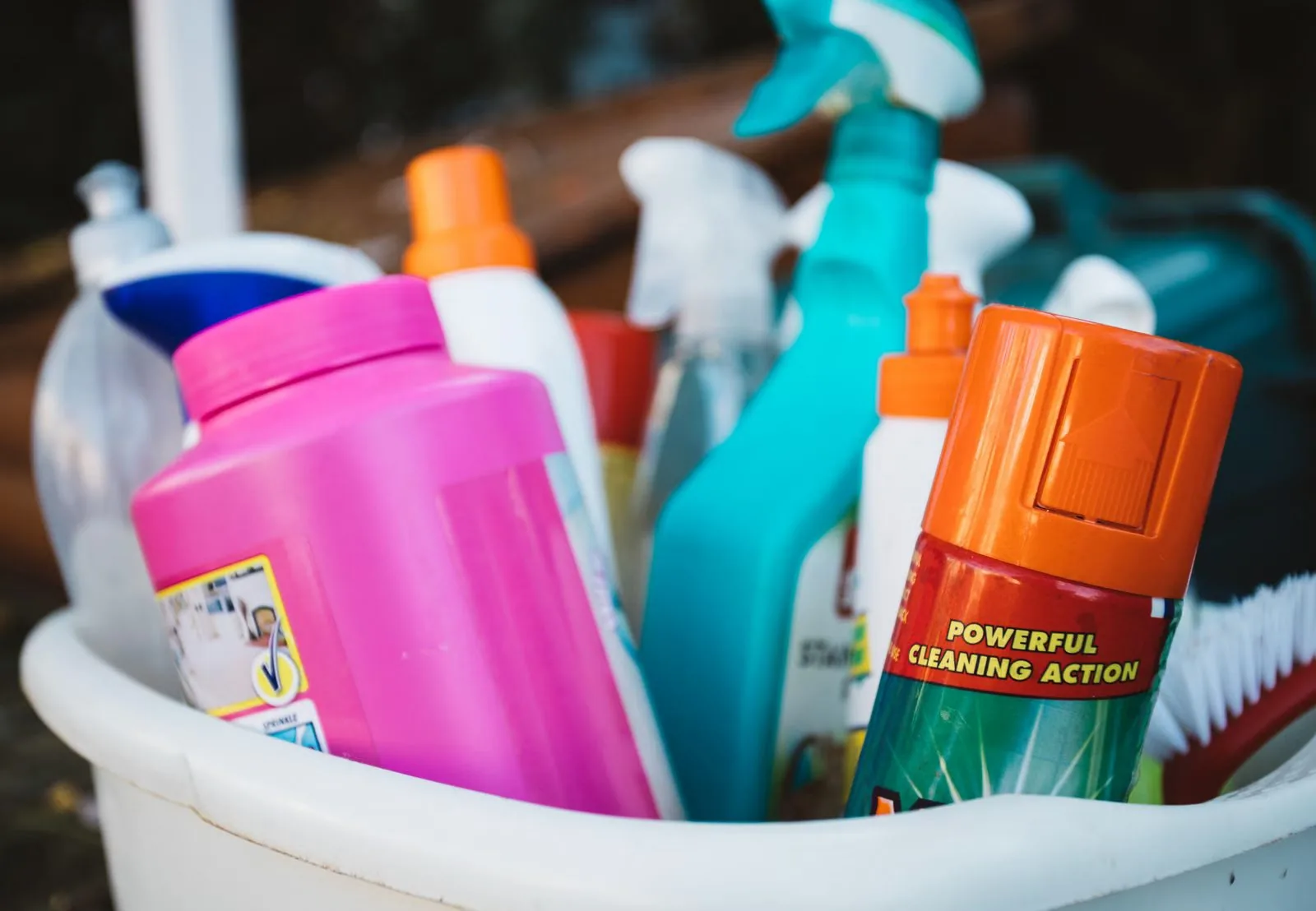
Trisodium phosphate, known as TSP, is the product most likely to damage a rental cabinet. It is a powerful degreaser that strips paint and dulls varnish, and it is designed for surfaces being prepared for repainting — which is exactly what a renter should not be doing. Bleach discolours wood and painted finishes and can weaken the glue in laminate. Ammonia-based glass cleaners leave a film that attracts more grease, and mixing ammonia with bleach creates toxic fumes.
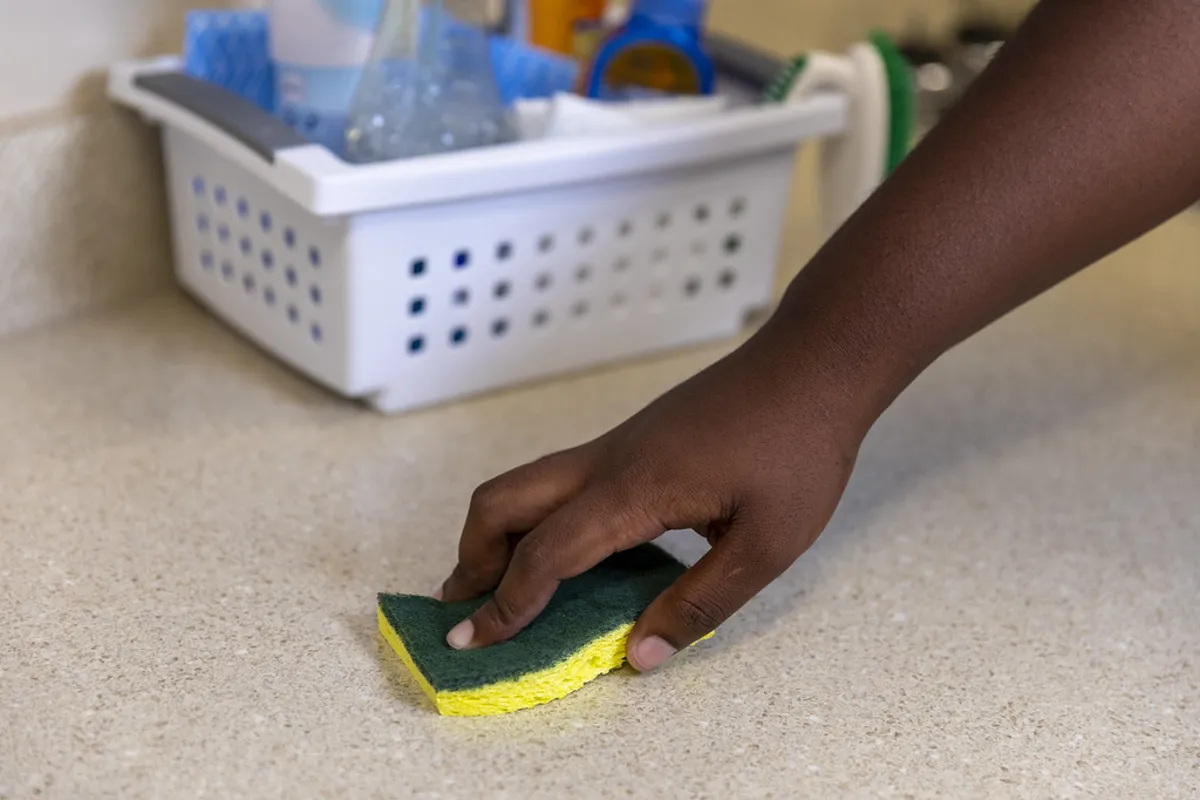
Abrasive pads are the other common mistake. The green scouring side of a sponge, steel wool, and powdered scouring cleaners all leave fine scratches in a cabinet finish. Those scratches trap grease, so the cabinet looks dirtier faster, and on laminate or thermofoil they are permanent. Magic erasers deserve a special warning: they are fine sandpaper in sponge form, and they will dull a glossy finish or rub paint off a matte one. Keep your toolkit to three things — dish soap, white vinegar, baking soda — plus microfiber cloths. When you reorganise the space under the sink, the under-sink storage ideas help keep those three supplies in one reachable spot instead of scattered across the kitchen.
Prevention: stop the grease before it lands
Cleaning is the second half of the job; the first half is keeping grease off the cabinets in the first place. Turn the range hood on before you start cooking and let it run for ten minutes after you finish. Wash a recirculating hood filter in hot soapy water every month; a clogged filter pushes grease straight onto the cabinets. Use a splatter screen or a lid on the pan when frying, and wipe the stove and the nearest cabinet doors after cooking while the grease is still fresh — the same thirty-second habit that keeps a glass stovetop clean works on cabinets too, and the glass stovetop cleaning guide explains the daily-wipe routine in detail.
Protecting your deposit at move-out
Photograph your cabinets at move-in — every door, inside and out, in good light — and keep the photos with your move-in checklist. If a door already has a grease stain, a worn patch, or a scuff, those photos are the difference between a normal wear-and-tear finding and a deduction from your deposit. Do the same at move-out, after your final clean. For the final clean, work the ladder from the top: the tops of the wall cabinets, the range hood, the doors nearest the stove, and the handles. If a stain survives all three rungs, photograph it and tell the landlord in writing before the final inspection. A grease stain reported early is a maintenance conversation; the same stain discovered at inspection is a deduction. If you are doing a whole-kitchen reset before moving out, the small kitchen declutter checklist helps you clear the cabinets first.
📌 Pin this for later
How to Clean Greasy Kitchen Cabinets in a Rental (Without Damage) — save it to your "Small Kitchen Organization" board.
Frequently asked questions
What is the safest way to clean greasy kitchen cabinets in a rental?
Start with warm water and a few drops of dish soap on a damp microfiber cloth, then rinse and dry. If grease remains, step up to a one-to-one mix of white vinegar and warm water, and only then to a baking-soda paste. Test every cleaner in a hidden spot first, and never use TSP, bleach, ammonia, or abrasive pads.
Can I use vinegar on kitchen cabinets?
Yes, on most finishes — mix one part white vinegar with one part warm water, spray lightly, let it sit for five minutes, then wipe, rinse, and dry. Test it in a hidden spot first, and keep vinegar off unsealed wood and natural stone. Never use it alongside bleach products.
Will baking soda damage cabinet paint?
A baking-soda paste — three parts baking soda to one part water — is gentle enough for a sound painted finish when applied with a soft cloth and wiped away promptly. It can dull matte or already-worn paint, so test it in a hidden spot first and use light pressure.
How do I get grease off the tops of kitchen cabinets?
Lay a damp, soapy cloth over the top edge for ten minutes to soften the dust-bound grease, then wipe with dish soap and warm water, stepping up to vinegar or a baking-soda paste if needed. Add cabinet tops to your deep-clean routine a few times a year.
Should I tell my landlord about a grease stain I cannot remove?
Yes. If a stain survives dish soap, vinegar, and a baking-soda paste, it has likely bonded with a worn or damaged finish, and removing it is the landlord's job. Photograph it and report it in writing before your move-out inspection.